
By Flava Digital Analysis Team
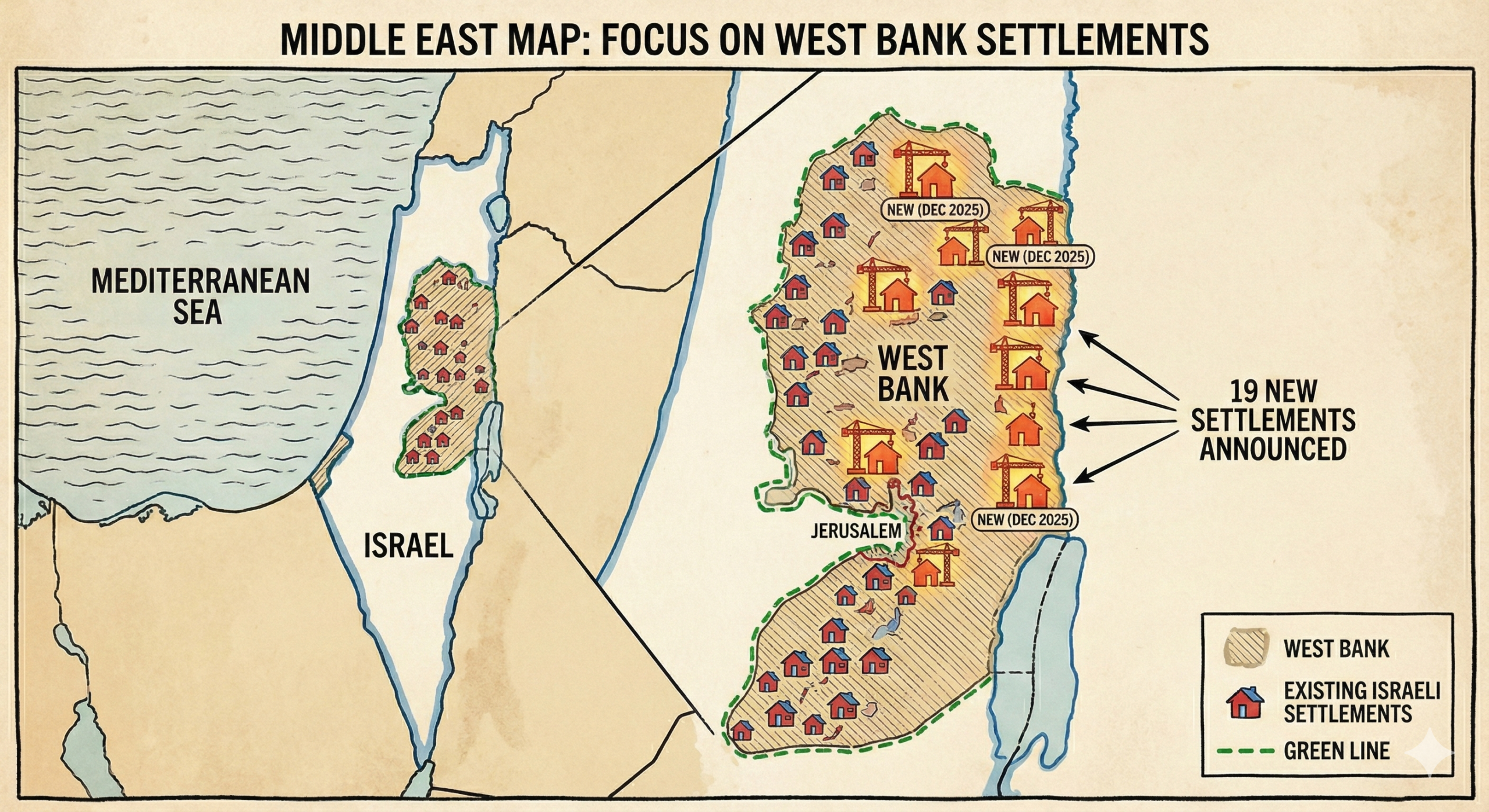
The Israeli Security Cabinet has formally approved the establishment and legalization of 19 settlements in the occupied West Bank, a move that Finance Minister Bezalel Smotrich described as a record-breaking expansion of Jewish presence in the territory.
The decision, which includes the retroactive legalization of several outposts and the re-establishment of settlements evacuated during the 2005 disengagement, has become a major flashpoint for international diplomacy.
The Scope: A 50% Increase
The approval of these 19 sites brings the total number of settlements in the West Bank to 210, up from 141 in 2022. Minister Smotrich, who oversees West Bank civilian affairs, revealed on Sunday that the Security Cabinet had authorized the move in a push to block the creation of a Palestinian state.
Among the newly legalized sites are Ganim and Kadim, two settlements in the northern West Bank that were dismantled two decades ago. Proponents in the far-right coalition have hailed the move as a “strategic victory” intended to prevent the geographic contiguity required for a future Palestinian state.
Regional Consensus: “Dangerous Escalation”
Unlike the muted response from Washington, Arab League member states have been unified and specific in their rejection of this 19-settlement package:
- Saudi Arabia: The Foreign Ministry condemned the move as a “blatant violation of international resolutions,” calling on the global community to end the expansion.
- The United Arab Emirates (UAE): In a strongly worded statement, the UAE denounced the step as a “dangerous escalation” that undermines the foundations of regional peace and security.
- Egypt: Cairo labeled the legalization a “flagrant violation of international law,” warning that it represents a major obstacle to the two-state solution.
- Qatar & Jordan: Both nations issued statements through their respective Foreign Ministries, with Jordan specifically citing the breach of UN Security Council Resolution 2334 and the International Court of Justice’s advisory opinions.
The Washington Pivot
The reaction from the United States remains the most notable departure from previous diplomatic norms. Under President Donald Trump and Secretary of State Marco Rubio, the administration has yet to issue a public position on the 19 new settlements.
While the “E4” European powers (UK, France, Germany, and Italy) and the UN have reiterated that all settlements are illegal, the State Department has focused its public messaging on Gaza stabilization and the “20-Point Plan.” Analysts suggest this “hands-off” approach to the West Bank reflects a shift in US strategy that treats these developments as internal Israeli policy, provided they do not disrupt broader regional normalization efforts under the Abraham Accords.
Sources: Arab News | Jerusalem Post | Al Jazeera | DW | The Guardian
