
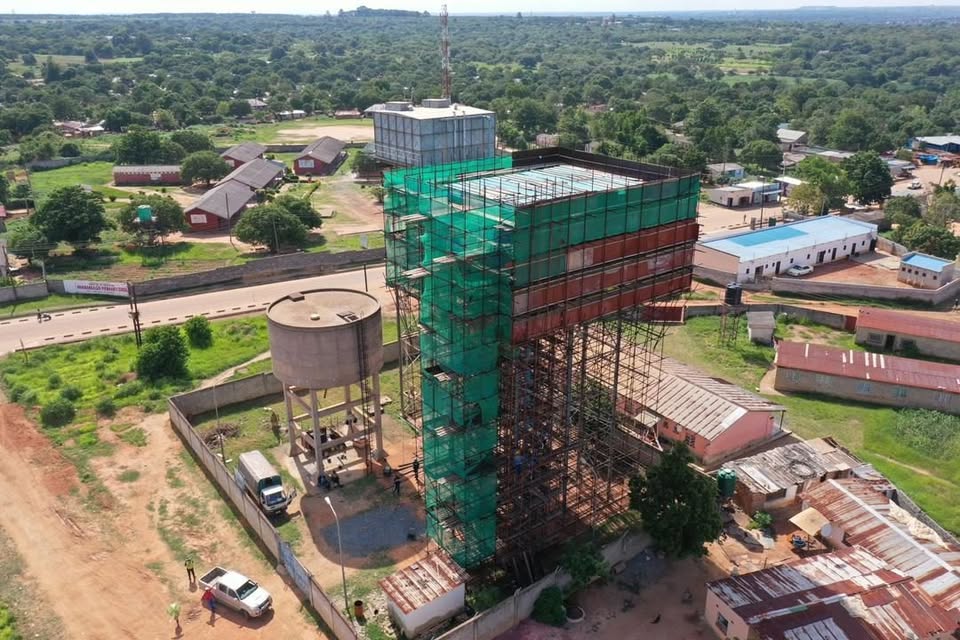
Nkana Water Supply and Sanitation Company is set to benefit from the €16 million Nexus Energy and Water Programme in Zambia (NEWZA), supported by the European Union, which aims to reduce electricity costs for water utilities across the country.
Speaking on the programme, Head of Cooperation at the Delegation of the European Union to Zambia and COMESA, Claudio Bacigalupi, said water utilities are among the largest consumers of electricity, a reality that is often overlooked in public discourse.
Mr. Bacigalupi explained that water pumping alone accounts for between 30 and 40 percent of total operational costs for most water utilities. As a result, a substantial share of revenue is spent on electricity instead of being invested in essential services such as infrastructure maintenance and network expansion.
He said the EU-supported programme is addressing this challenge by introducing renewable energy power plants dedicated specifically to water utilities, enabling them to significantly reduce electricity expenditure and redirect savings toward improved service delivery.
Mr. Bacigalupi added that the initiative will help utilities strengthen system maintenance, prevent infrastructure deterioration, and extend water networks to underserved communities.
Meanwhile, Nkana Water Supply and Sanitation Company Managing Director Steven Mwale disclosed that the project is currently at the tendering stage, with the utility implementing a major renewable energy initiative aimed at cutting electricity costs through the installation of 42 energy-efficient water pumps.
Dr. Mwale said Nkana Water currently spends between K3 million and K4 million per month on electricity, accounting for more than 25 percent of the company’s monthly revenue, making energy one of its highest cost drivers.
He further revealed that the utility is developing a 13.5-megawatt solar power project, the largest of its kind within the company. The main solar plant is expected to generate about 4 megawatts, with additional smaller plants to be installed at 13 distribution centres and water treatment facilities.
Dr. Mwale noted that energy costs are second only to personnel expenses, followed by chemical costs, placing significant pressure on the utility’s financial sustainability. He expressed optimism that once the solar project becomes operational in 2027, energy expenses will be substantially reduced, improving Nkana Water’s overall cost structure and service delivery capacity.
